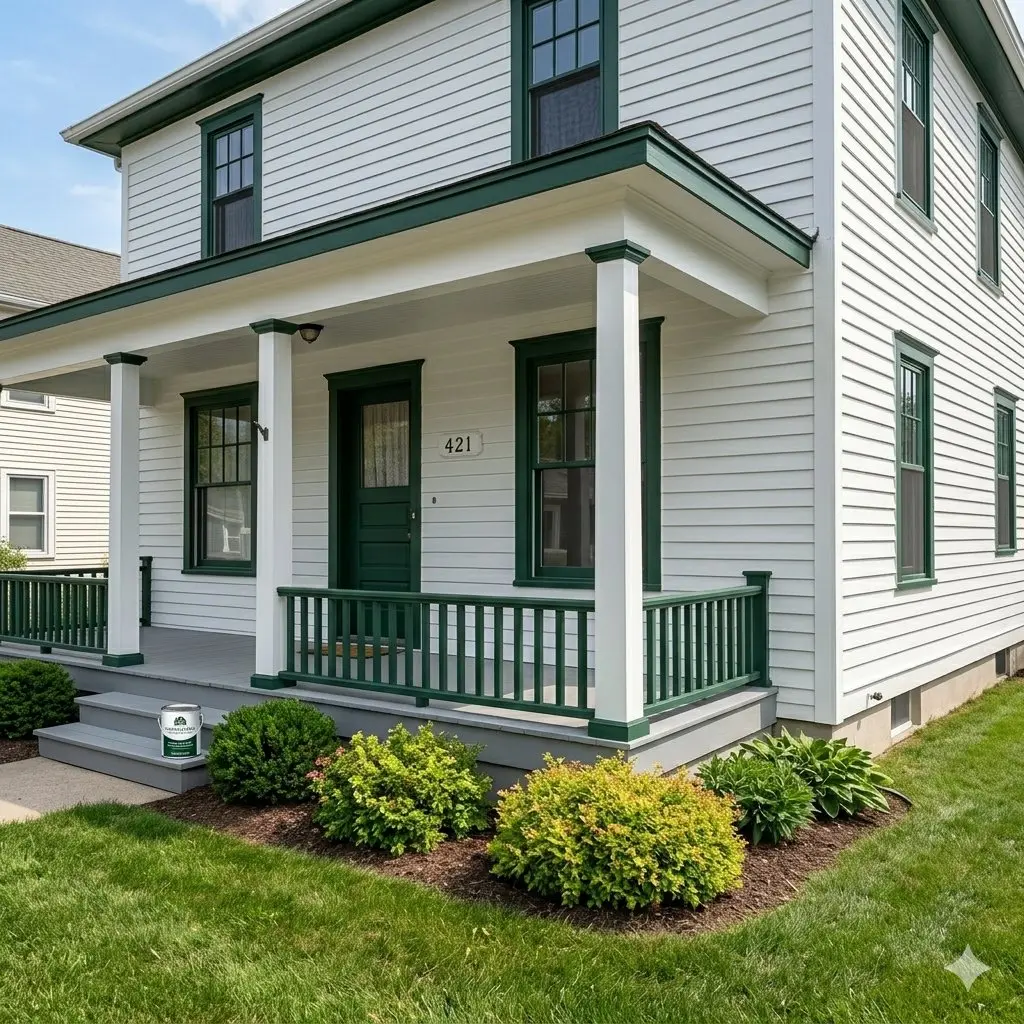
Florida is one of the toughest environments in the country for exterior paint. Relentless UV radiation, year-round high humidity, intense summer rainstorms, salt air drift from the coast, and freeze-thaw cycles that — while mild by northern standards — still exist, all combine to degrade paint faster than in almost any other region. Homeowners who move here from the Midwest or Northeast often underestimate how quickly the climate will work on an exterior finish. Understanding the real timeline for repainting in Florida — and knowing the signs that tell you it's time now rather than next year — is one of the most useful things a Wesley Chapel homeowner can know.
The General Rule: 5 to 7 Years for Most Florida Homes
In most parts of the country, a quality exterior paint job on a well-maintained home can last 10 years or more. In Florida, the realistic expectation for most stucco homes is closer to 5 to 7 years before the paint begins showing meaningful degradation. That's not a failure of the paint or the painter — it's simply the reality of the environment. The UV index in the Tampa Bay area is significantly higher than the national average, and UV radiation is the primary driver of paint film breakdown, color fading, and chalking.
The substrate matters too. Most Wesley Chapel homes are stucco over concrete block or frame, which is a more porous and thermally active surface than wood or fiber cement. Stucco expands and contracts with temperature changes, which creates micro-stresses on the paint film over time. A paint system that handles this well — one with good flexibility and elongation — will outlast one that doesn't, but even the best product has limits in this environment.
Wood trim, fascia, and soffits typically need attention more frequently than the main body of the house — sometimes every 3 to 5 years — because they're more vulnerable to moisture intrusion and are often in contact with organic material like leaves and debris that holds moisture against the surface.
Warning Signs That Mean It's Time Now
The calendar is a useful starting point, but the condition of your home's surface is the real indicator. Here are the signs that tell us a home needs repainting regardless of when it was last done.
Chalking and Fading: Run your hand along the exterior wall. If you come away with a powdery residue, the paint binder has broken down from UV exposure and is releasing pigment. This is called chalking, and it's a clear sign the paint has reached the end of its useful life. Heavy fading — where the color is dramatically lighter than when the paint was applied — is another visual indicator of the same process.
Cracking and Peeling: Paint that is cracking, checking (developing a pattern of fine surface cracks), or peeling away from the surface is no longer providing any protective function. Beyond aesthetics, this is a moisture intrusion risk. Once water gets behind paint on stucco, it can cause significant damage to the substrate, and repairs become far more expensive than a timely repaint would have been.
Mold and Mildew Staining: Florida's humidity creates ideal conditions for mold and mildew growth on exterior surfaces. Some surface staining can be removed with a quality pressure wash and the right cleaning agents. But if mold has penetrated the paint film, cleaning alone won't solve the problem — the surface needs to be treated, primed, and recoated to prevent recurrence. Our pressure washing service is often the right first step to assess whether cleaning alone will resolve the issue or if repainting is needed.
Caulk Failure Around Windows and Doors: Caulk at window frames, door frames, and penetrations fails before the paint does on most homes. Gaps, cracks, or hardened and pulling caulk are an entry point for water. When we see caulk failure, we always address it as part of a repaint project — new caulk under new paint is the right approach rather than trying to paint over failing caulk.
How the Sun Exposure Affects Timing
Not all sides of your home age at the same rate. West and south-facing facades receive the most direct sun during the hottest parts of the day and will show UV degradation noticeably faster than north and east-facing walls. It's common to see a home where the west face is chalking and fading while the north face still looks reasonably fresh. This doesn't mean you can get away with only painting the south and west — color matching aged paint is virtually impossible — but it does mean that a whole-house repaint is often driven by the condition of the worst-exposed faces even if the others have some life left.
Homes with significant shade from mature trees will see their paint last longer, both because the direct UV exposure is reduced and because the surface temperature stays lower. The thermal cycling — the expansion and contraction of the substrate and paint film — is driven by temperature swings, and a shaded wall experiences significantly less of it.
The Impact of Paint Quality on Longevity
One of the most common mistakes homeowners make is not understanding how dramatically paint quality affects longevity. Budget-tier exterior paints that sell for under $30 per gallon at big-box stores are formulated to hit a price point, not to survive Florida's UV exposure and humidity. In this climate, the difference between a budget paint and a premium product isn't just about how it looks on day one — it's about whether you're repainting in 4 years or 8 years.
We use Sherwin-Williams Duration and Emerald exterior formulas as our standard on exterior painting projects. Both offer excellent UV resistance, high film thickness for better coverage and durability, strong mildew resistance, and the flexibility needed to handle stucco's movement. When you factor in the labor cost of repainting — which is the majority of any paint project's total cost — the extra $10 to $15 per gallon for premium paint is almost always worth it over a full project lifetime.
Surface Preparation Makes or Breaks the Timeline
Even the best paint won't last if it's applied over a surface that hasn't been properly prepared. Thorough pressure washing to remove chalk, mildew, and loose material is essential. Cracks in stucco need to be properly opened, treated, and patched before painting — painting over a crack doesn't seal it, it just hides it temporarily. All caulk joints need to be inspected and failing caulk replaced. Bare areas where old paint has peeled need to be primed before topcoat application.
Skipping or rushing any of these steps is the primary reason paint jobs fail prematurely. We've repainted homes where a previous contractor clearly skipped the prep process, and the difference in how quickly the new paint failed was stark. A properly prepped surface gives the paint film the clean, solid base it needs to bond and last.
When to Call for an Inspection
If your home was last painted more than 5 years ago, or if you're seeing any of the warning signs described above, it's worth having a professional look at the condition of your exterior. We offer free estimates for Wesley Chapel homes throughout the area — including Seven Oaks, Lutz, and Land O' Lakes. During an estimate we'll walk the entire exterior with you, point out areas of concern, explain what preparation will be needed, and give you a clear picture of what a proper repaint project will involve.
There's no pressure and no obligation. Many homeowners find that a professional set of eyes gives them clarity on whether repainting is urgent or can reasonably wait another season, which helps with budget planning even if the project is still a year away.